Selected Case Studies
While the Org Review section is an exhaustive look at the process behind what we were accomplishing with the Reds, this section highlights a pair of athletes, their before/after, and how the progress they made was achieved.
Graham Ashcraft
Graham was drafted in the 6th round (2019) out of the University of Alabama at Birmingham after transferring out of Mississippi State. He was seen as a player with significant control problems, with an NCAA walk rate of 6.2 walks per nine innings and a 5.63 ERA to boot. He threw hard - on the lower end of mid-90s - but was criticized for having a "dead zone" fastball to go with poor command. He was classified as a fast-moving reliever with no chance of remaining a starting pitcher, and he himself thought as much. When I discussed this with him in 2020, I told him the best way to have an impact in the big leagues as a reliever was to stay as a starter to throw the most innings possible and develop in that fashion. He reluctantly agreed.
As the pandemic hit, Graham worked closely with me as an assigned athlete with a few specific goals that we outlined in the 2020 Spring Instructional League (prior to Spring Training).
- Develop his fastball into a true cutter or create true lift, rather than the dead zone it was in (11.2" average carry, 6.2" average run in 2020)
- Improve his strikeout to walk ratio (2.8 k/bb in rookie ball, but 1.36 k/bb in the same year in college)
- Restore his top end velocity to what it was pre-surgery in college (top fastball velocity in 2020 was 96.7 MPH)
Graham worked with a CleanFuego ball and high-speed video to iron out the spin axis on his fastball, uploading videos constantly and staying in touch regularly. Because Graham is not much of a feel-based pitcher and partially because his delivery is so rotational that there isn't much opportunity to get his hand on line for very much time, he had trouble creating lift on his fastball. It was looking like he would throw just a true cutter as his main fastball-type pitch.
On the other two areas, we saw considerable improvement. His weight training routine centered around power, shifting away from pure strength, and he got into more weighted ball work, primarily focusing not on arm speed, but sequencing drills - lots of PlyoCare work with drill-specific recommendations. His velocity continued to climb back steadily into the mid-90s, then started touching 97-98 MPH regularly in live ABs against other pro athletes at home. Additionally, his command-specific work that we assigned him was going well - his intended misses were shrinking, and he developed much better feel for his slider, turning it into the lateral sweeper-type pitch rather than the power-gyroball pitch that existed prior (2.5" average sweep, 1.7" average depth at 84.8 MPH in 2020).
Graham was one of our first PULSE (then Motus) test subjects, and he wore it consistently and found great value in the data - even though we weren't using it for much outside of general monitoring at this point during the pandemic training period. Given the high innings load Graham was able to rack up at home, we excluded him from Fall Instructional League in 2020, which he understood and took in stride.
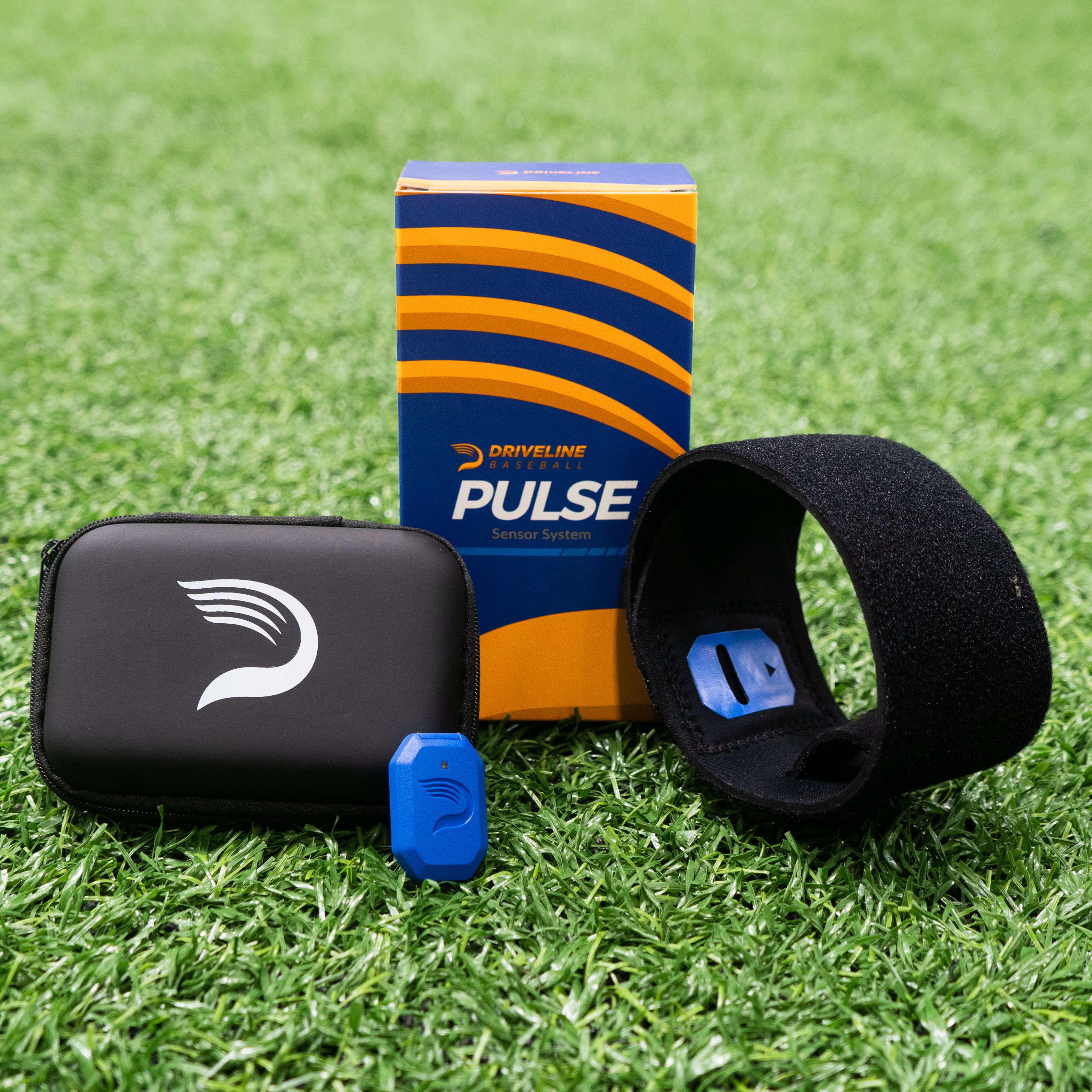
We invited Graham to early camp, which was not separate from the big league camp in 2021 due to the COVID restrictions - he would get regular time against our big league hitters. His first bullpen went off well and the ball was coming out good - we kept technology away from the pitchers for their first bullpens to ensure they'd just get in a groove and attack over the plate. He adopted the use of PULSE right away and continued to monitor his workload. As we settled into the Live AB portion of Spring Training, Graham took the ball in the second session and sat 97-99 MPH with extreme cut on his fastball, blowing away four big league hitters in one session and showing off two plus breaking balls (slider, curve). A pro scout saw him and wrote in his report: "I swear I saw Ashcraft throw 96 MPH sliders." Occasionally, he'd do just that - getting upwards of 4-5 inches of sweep on his fastball when he really got around the ball.
However, it became quickly apparent that Graham's volume between his Live AB sessions and bullpens was far too high. He began to regress in command/control, walking a ton of batters in early camp, and showing off serious frustration to boot. After one particularly non-competitive appearance and poor attitude between the lines against the Cleveland High-A workgroup, we sat him down and pulled him from games, telling him that his performance wasn't up to par and his attitude was worse. It was a contentious discussion, but to his credit, Graham came back the next day and asked for advice. Bryan Conger sat down with him and showed him how his highest workload days in the PULSE dashboard were days he wasn't even throwing against hitters or bullpens! He was overdoing it, and had to change his routine if he wanted to survive not just as a starting pitcher, but one that could stay healthy and consistent in any role. Taken aback by the data staring him in the face and telling the story better than any words could, Graham vowed to change, and worked closely with Bryan Conger, Brian Garman, and myself to monitor his workloads better and get into a better groove while we removed him from games for two weeks.
Once we returned Graham back to action against the Cleveland High-A team, we started to see a very different pitcher - he started absolutely pounding the strike zone, and his slider became a real weapon. He commented multiple times that the changes he made due to the PULSE data caused him to feel much better on a regular basis, and he cut down on constant recovery modalities to try to get his body back into fighting shape. He said that the reduced fatigue absolutely contributed to throwing more strikes. In the last intrasquad game of camp, I had to order several more batters in the box to get Graham to his pitch count, as he was simply running them over with no mercy. All smiles, he came out of the game, sat next to me as I charted the next pitcher, and said: "Kyle, I want to be a starting pitcher."
I laughed and asked what was the change of heart was all about, and he said that he finally felt confident he could take the ball every fifth day and dominate - he credited the workload management system with primary success. I told him he'd be doing just that, and breaking with Dayton. Graham would go on to dominate High-A Dayton, and do even better in Double-A Chattanooga, making his debut in Double-A with a splash - throwing a 102 pitch, complete game shutout with 8 strikeouts, carrying a no-hitter deep into the game.
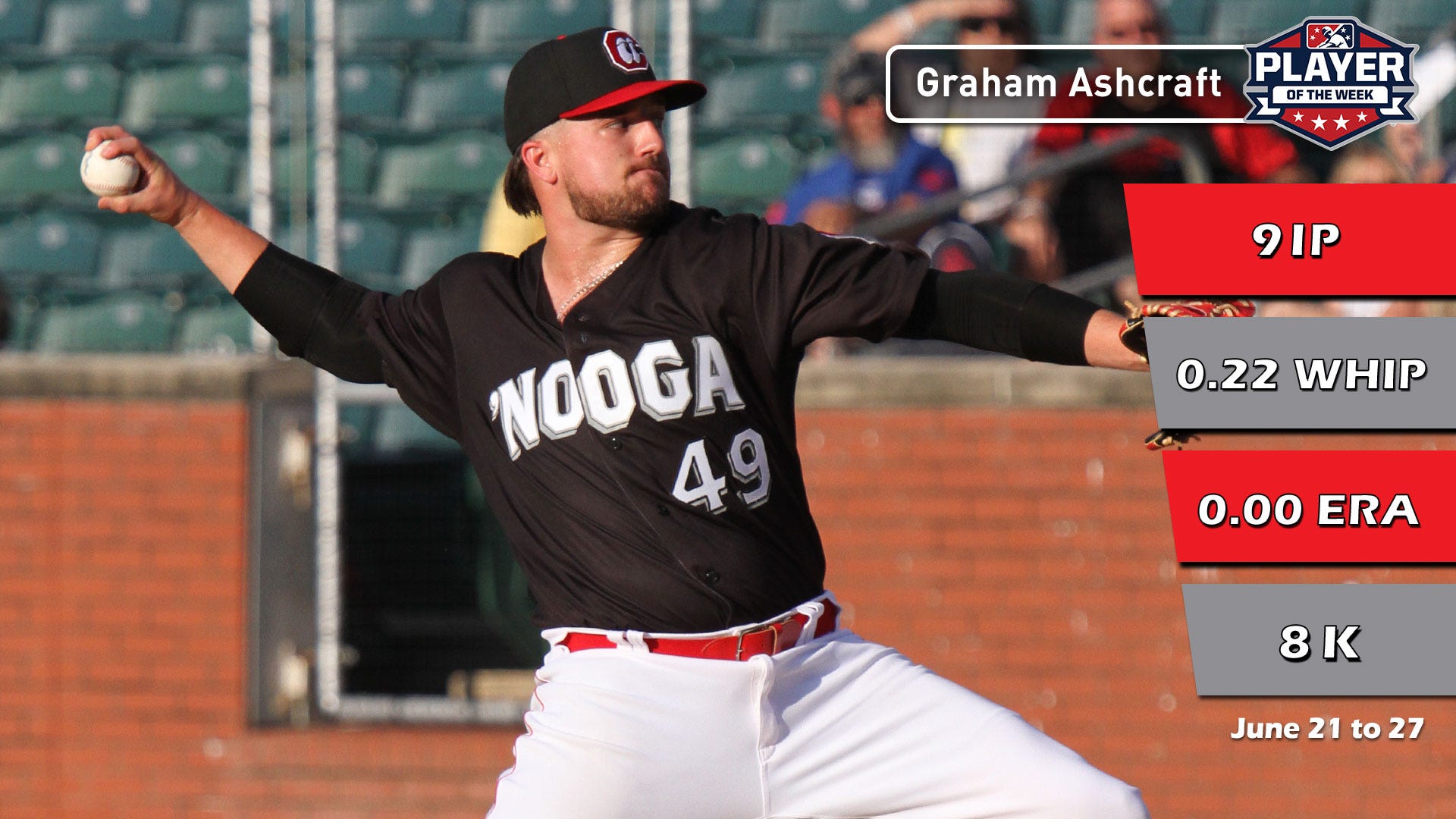
2019 Season
- Innings Pitched: Rookie (53.2 IP)
- xERA: 3.85
- ERA: 4.53
- FB Velocity: 94.0 MPH avg, 96.7 MPH peak
- FB Movement: 11.2" carry, 6.2" run: Stuff+ of 42
- SL Velocity: 84.8 MPH avg, 87.1 MPH peak
- SL Movement: 1.7" depth, 2.5" sweep: Stuff+ of 122
- K/BB Ratio: 2.86 k/bb
2021 Season
- Innings Pitched: A+ (38.2 IP), AA (72.1 IP)
- xERA: 2.94
- ERA: 3.00
- Fastball Velocity: 95.6 MPH avg, 99.8 MPH peak
- Fastball Movement: 8.0" carry, 1.0" sweep: Stuff+ of 113
- Slider Velocity: 85.2 MPH average, 89.7 MPH peak
- Slider Movement: 4.1" depth, 10.1" sweep: Stuff+ of 154
- K/BB Ratio: 3.49 k/bb
Carson Spiers
Carson was a non-drafted free agent (NDFA) out of Clemson University in 2020. Eric Jagers and I recruited him, and prepared a packet for him as we did for all of our NDFA targets, which eventually culminated in Carson choosing the Reds over four other teams. Carson's coaches from Clemson lobbied hard for him and extolled the virtues of his competitive nature and how well he developed while in college, and cited the fact that he comes from a long legacy of Clemson baseball players with an uncle who played over a decade in the big leagues (Bill Spiers). While Carson was an impressive interview and had excellent control to boot, his Trackman data from Clemson didn't hold a lot of promise:
- Two-Seam Fastball: 91.4 MPH average - 13" run, 12" carry - 61% usage
- Curve: 80.3 MPH average - 11" sweep, 3" carry - 11% usage
- Changeup: 81.7 MPH average - 13" run, 12" carry - 28% usage
Carson's changeup and fastball were effectively the same pitch, while his breaking ball had very low usage despite being fairly promising as a big sweeper. We brought Carson into Fall Instructional League with the intention of teaching him a breaking ball and potentially replacing his fastball with a four-seam fastball, or a true sinker. In instructional games, Carson showed off his competitiveness and dominated the lower-level hitters with elite fastball command to both sides of the plate. He was picking up a four-seam fastball quickly, which enabled him to attack the top of the zone and let his changeup play better. He was making slow but steady progress on throwing his breaking ball harder, and considered turning it into a whole new pitch in the off-season - calling his big sweeper his slider, with a harder, shorter breaking ball as a cutter (most algorithms will say Carson's breaking ball is a curve and his harder pitch is a slider, but he wanted to keep the mentality of slider/cutter rather than curve/slider, so we rolled with it).
In the off-season, Carson worked with Rob Wooten over the break on sharpening the pitches that both Eric Jagers and I laid out for him in instructional league, and improving his fastball velocity. He was a very compliant athlete who led by example in the Slack groups that we set up.
When Carson showed up to Spring Training 2021, he was assigned to the Daytona Beach (Low-A) workgroup with Forrest Herrmann as his everyday coach. Throughout Spring Training, he continued to develop both his slider and cutter and showed it off in games to great effect - and his changeup was coming along as well. We converted him to a starting pitcher, which we told him prior to showing up would be a possibility - and he voiced strong desire to start, despite being a reliever his entire college career. We built his innings slowly using PULSE as our guide, and got him to a spot where he could go 5+ innings in his first start when he broke with the full-season club.
Carson didn't last long at Daytona Beach - he simply overmatched Low-A hitters with a mix of excellent command, vastly improved stuff, and sheer competitiveness. He was brought out of the bullpen one week to close a no-hitter and secure the combined effort. We sent him to Dayton (High-A) to begin in the bullpen there, with the aim of moving him to the rotation as we looked to promote Graham Ashcraft and Eduardo Salazar at some point from there to Chattanooga. It wouldn't take long, as Carson struggled early but won Pitcher of the Week in the High-A Central division coming out of the bullpen and shutting down the hot-hitting Great Lakes team over six innings, allowing the Dayton team to come back and win. He was moved into the rotation shortly thereafter, and continued to work extremely hard on both his pitch design targets and improving his fastball velocity.
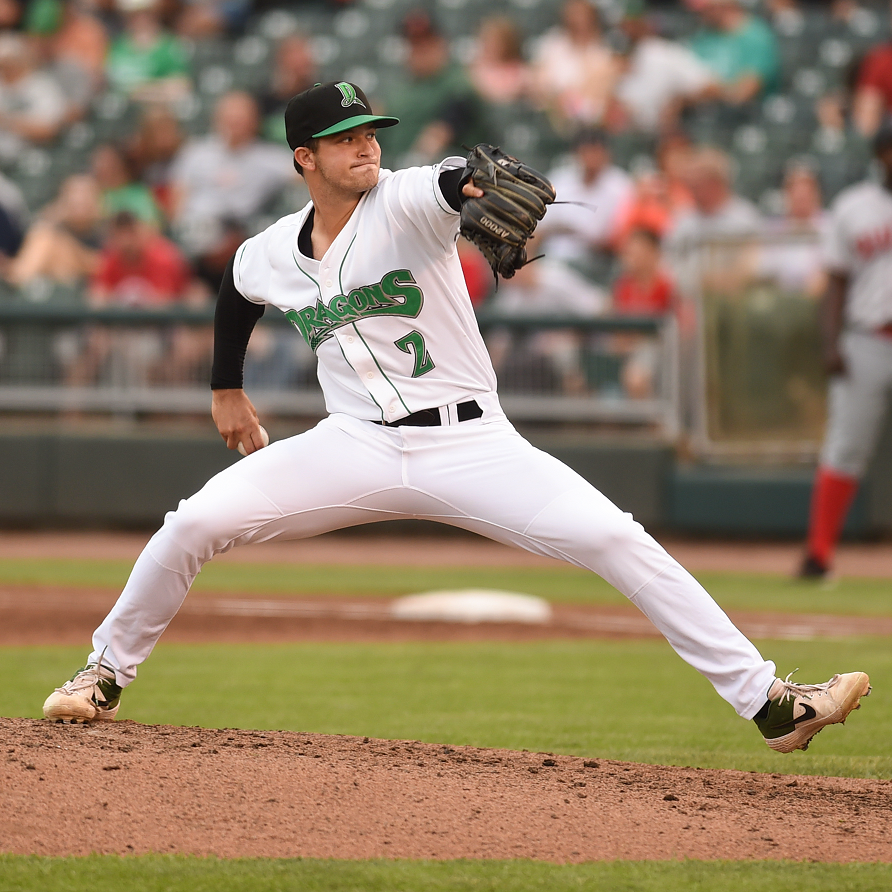
Carson would wrap the year as our ace in Dayton, logging 111.2 innings in his first year as a starting pitcher. We were able to monitor his workload using PULSE to ensure he was recovering well, especially in addition to our readiness tests on force plates and other metrics we collected on our pitchers. Carson bought into the data-driven development strategy and the payoff was undeniable. Carson would go on to improve his fastball velocity, develop two excellent breaking balls, seriously improve his changeup, and turn into a priority starting pitcher coming from the NDFA college reliever ranks.
Carson is singled out as a case study because he is a perfect example of the value of applying player development initiatives equally across the board - methodically creating massive value out of down round pitchers is an underexplored area for most professional organizations.
Carson Spiers
2021 Season
Innings Pitched: A (22.2 IP), A+ (89.0 IP) xERA: 3.75 ERA: 3.55 Fastball Velocity: 92.2 MPH avg, 95.8 MPH peak Fastball Movement: 18.3" carry, 7.4" run: Stuff+ of 115 Cutter Velocity: 85.1 MPH average, 89.4 MPH peak Cutter Movement: 6.0" carry, 4.0" sweep: Stuff+ of 98 Slider Velocity: 78.6 MPH average, 84.4 MPH peak Slider Movement: 1.5" depth, 13.2" sweep: Stuff+ of 100 Changeup Velocity: 82.7 MPH average, 86.2 MPH peak Changeup Movement: 5.6" carry, 14.6" run K/BB Ratio: 3.82 k/bb